

We discover, design, and characterize
the advanced materials humanity needs.
At UC San Diego, we leverage our cross-disciplinary expertise to discover, design, and characterize advanced materials needed to address global societal challenges. Our materials work is relevant for developing zero- and low-carbon energy and transportation systems; cost-effective healthcare advances; solutions for natural-resource sustainability; and next-generation information technologies.
This work is grounded in our ability to control materials at the level of atoms and electrons.
Equally important, we are world-leaders in characterizing the structure and function of materials at the nanoscale level using a suite of cutting-edge analytical and theoretical tools, many of which we have developed here at UC San Diego.
Learn more on the "About" page.
Download the IMDD brochure.
About
At the UC San Diego Institute for Materials Discovery and Design (IMDD)
we discover, design, and characterize the advanced materials humanity needs.
Learn more about IMDD here.
In July 2020, we celebrated our first big IMDD win: we landed an $18 million NSR MRSEC grant.
Recent News

Spray-on Antibacterial Coating Offers New Protection for Plants Against Disease and Drought
December 18, 2025
Engineers have developed a spray-on polymer coating that could help plants resist harmful bacterial infections and survive drought. Spraying just part of a leaf results in bacterial immunity and improved drought tolerance for the entire plant. Full Story

Engineers Take a Closer Look at How a Plant Virus Primes the Immune System to Fight Cancer
July 25, 2025
A virus that typically infects black-eyed peas is showing great promise as a low-cost, potent cancer immunotherapy—and researchers are uncovering why. Full Story
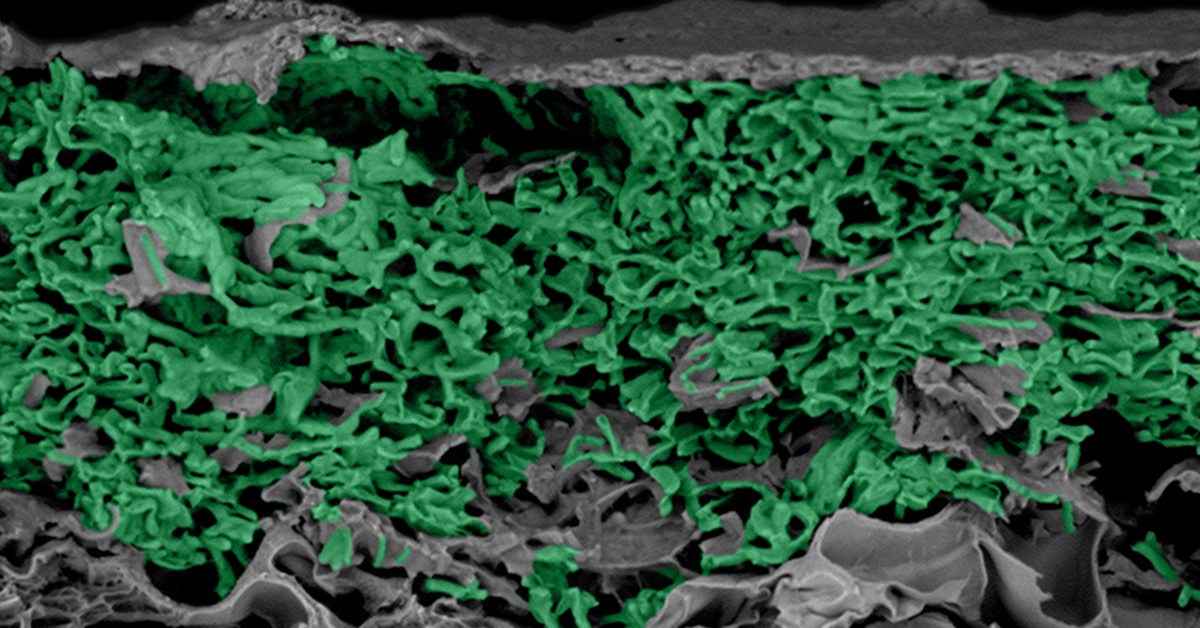
Living Materials Now Easier to Build with a Larger Palette of Ingredients
June 30, 2025
Sustainable materials—powered by sunlight and living microbes—that remove pollutants from water, release oxygen into a wound or heal themselves after damage could become simpler to create thanks to new research by a team of biologists and engineers at UC San Diego. Full Story
Industry Partners


